
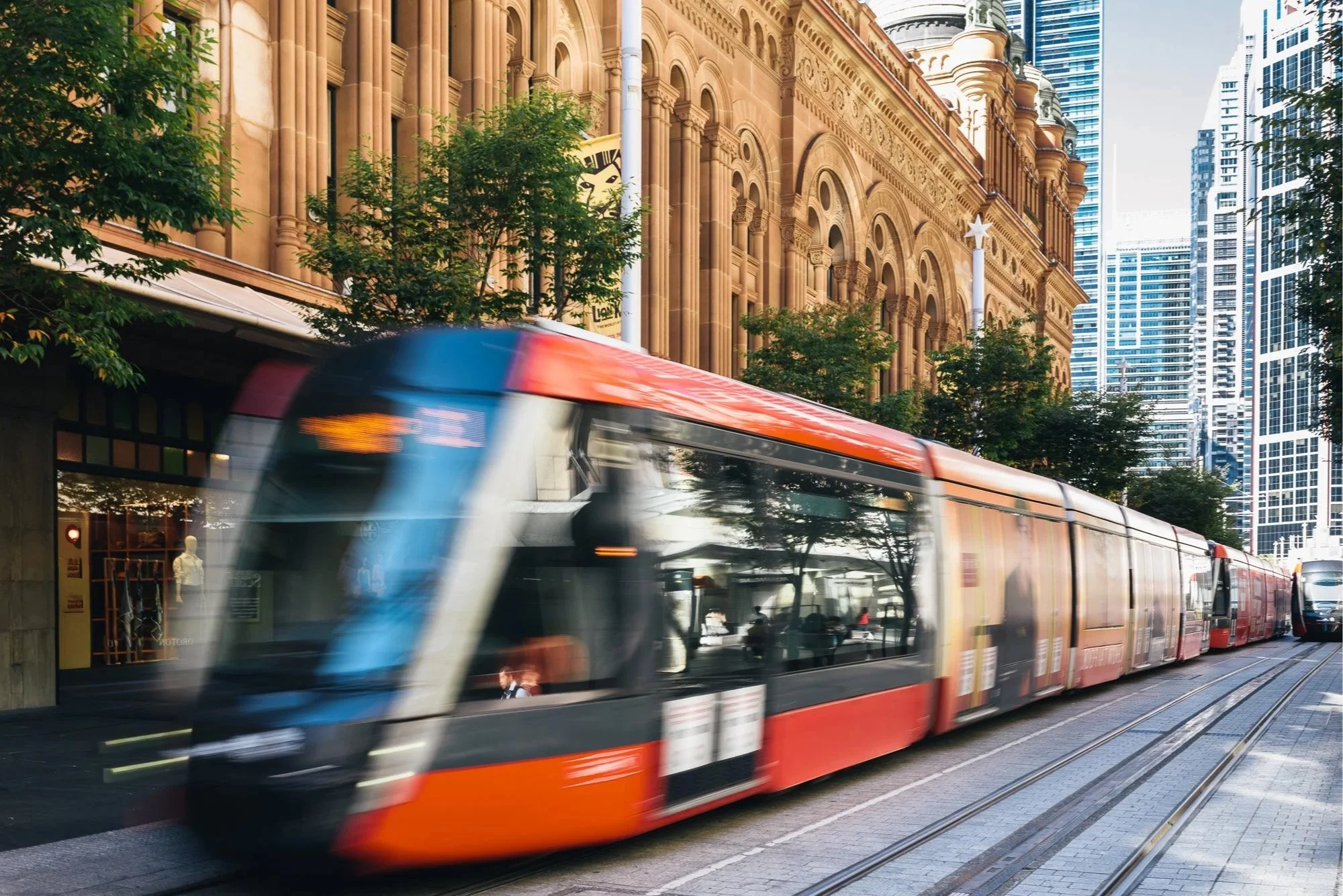
Sydney Light Rail
Next time you hop on the Light Rail, consider all who have taken this route before you. From beneath the tracks, the Artefact team discovered 120 historical finds including a WWII air raid trench, historic hotels, convict-built drains and even a Chinese merchant shop.
The project
Location: Sydney CBD on Gadigal Country
From Randwick and Kingsford to Circular Quay, the Artefact team tracked the past –unearthing an array of artefacts from times past that lay under the 12km-long Light Rail. More than 40,000 artefacts in fact!
The CBD and South East Light Rail (CSELR) Project was a State Significant Infrastructure Project that involved the construction of 12 km of track with 20 stops connecting Circular Quay, Central Station, and Moore Park, Randwick and Kingsford.
2,500 pages of reporting and 30,000 photos later, this 10-year project involving 85 team members was completed in 2025 honouring and documenting our city’s heritage forever more.
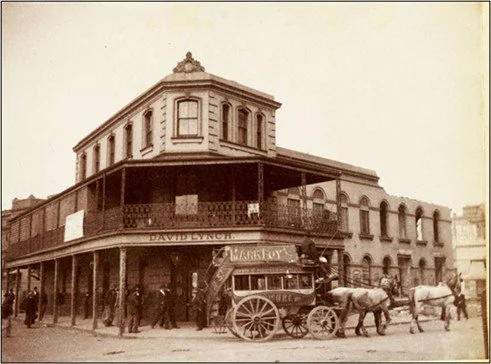
130 Ship Inn, Circular Quay, 1902, courtesy State Library of NSW
-
Acciona on behalf of All Track Consortium and Transport for NSW
-
Heritage Impact Assessment
Historical and Aboriginal archaeological monitoring and excavations
Excavation Reports
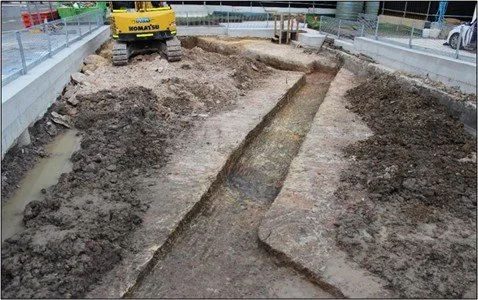
WW II Air raid trench discovered in High Cross Park, Randwick
Heritage solution
A Heritage Impact Assessment prepared for the project identified the potential to impact on a number of local and state significant archaeological remains including The Tank Stream, First Fleet Park, Alfred Street/Herald Stare, George Street North, Town Hall, Belmore Park, Eddy Avenue, Chalmers Street (all in the Sydney CBD) and Tay Reserve (in Kingsford, east of the CBD).
In 2015 Artefact were engaged to undertake archaeological excavations along the route in line with the mitigation strategy. Physical archaeological investigation commenced in early 2016 and reached completion in 2020.
Outcomes
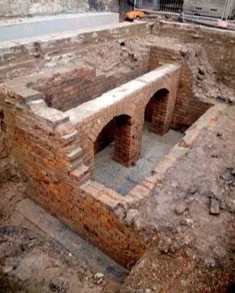
Substantial archaeological remains from commercial properties were encountered at Circular Quay and north George Street: the foundations of the original Ship Inn and a complex series of warehouses dating from 1846 to 1936, Chinese Merchants stores and other commercial buildings along George Street.
The most substantial archaeological find was structural evidence of the c.1867 Ship Inn (pictured) which provided insight into construction practices.
Seven report volumes and nearly 2,500 pages of reporting along with 9000+ pages of appendices was completed in 2025.